
 EN
EN Outside diameter
Measure the finished tread across the wheel. If the existing wheel is worn, tell us whether the value is a measured used dimension or the intended new dimension.
Basic dimensions help begin the discussion. The manufacturing drawing and critical tolerances still need to be agreed before production.
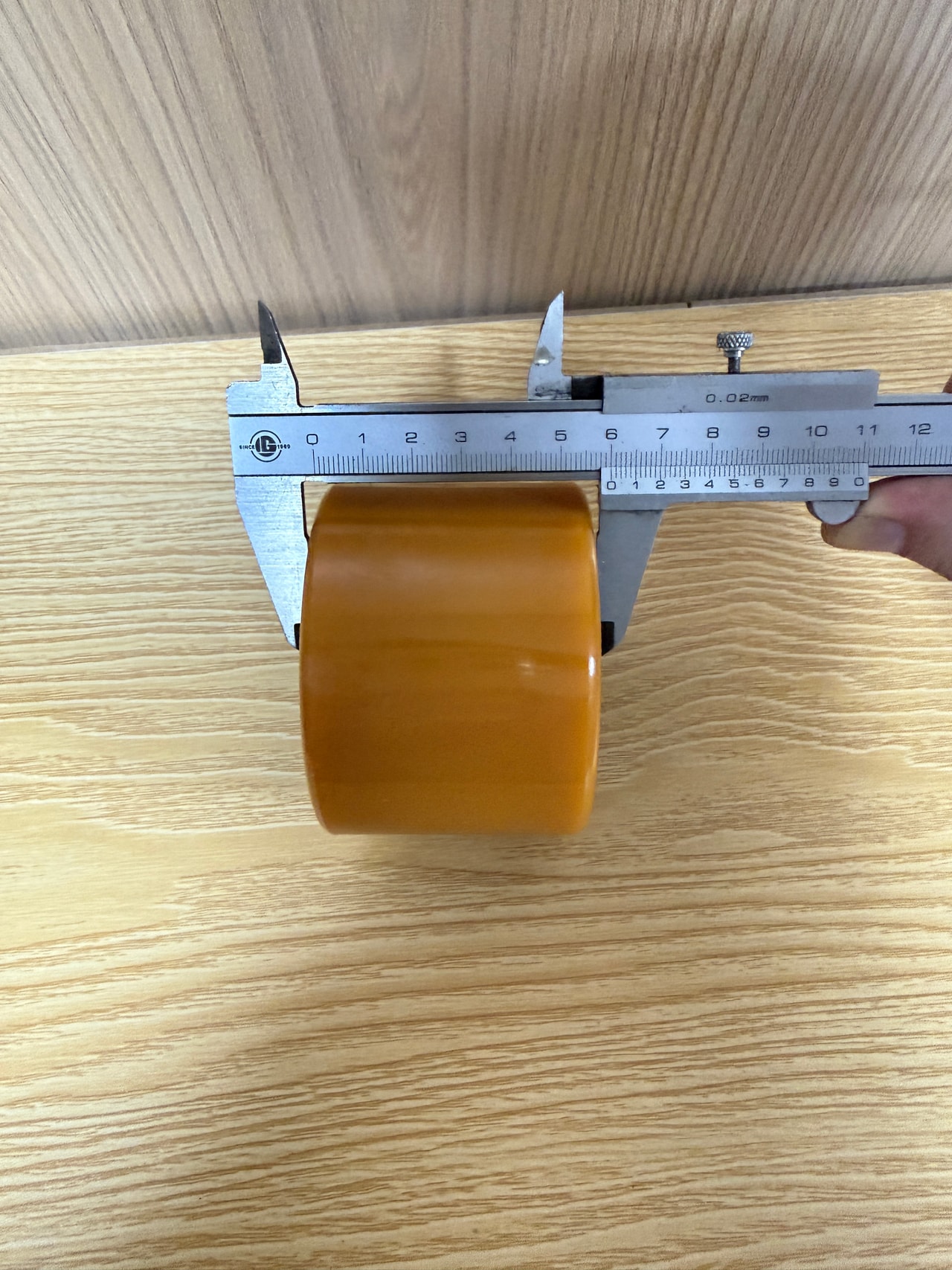
Example: measuring polyurethane face width. Record your own required dimensions and units.
Include units and distinguish measured values from required values. Existing wear can change the dimensions of a used wheel.
Measure the finished tread across the wheel. If the existing wheel is worn, tell us whether the value is a measured used dimension or the intended new dimension.
Measure the polyurethane tread width. Record overall hub width separately, including any hub projections beyond the tread.
Measure the bore and note internal steps, bearing seats, grooves or bushings. A bore diameter alone may not describe the complete mounting interface.
Photograph both faces and the side. Record grooves, flanges, keyways or bolt holes with their reference dimensions. Include a drawing for critical fits.
Send what you have, together with photos and the mating shaft or bearing information. A physical sample or additional measurements can be discussed during the review.
Drawing, sample or a set of measurements. Let’s define your next wheel together.